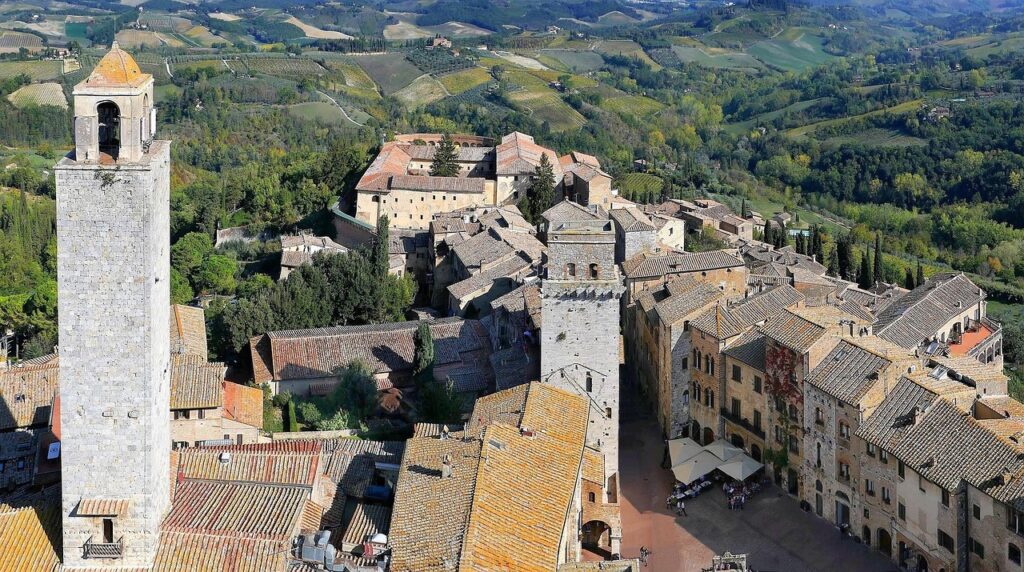






Introduction: why choose slow travel in San Gimignano
San Gimignano, a lovely medieval hilltop town in the Val d’Elsa of Tuscany, practically begs for slow travel: taking your time, watching, and savoring. Rather than rushing through a checklist of sights, this guide offers a route for travelers who want to feel the stones, listen to the bells, enjoy a gelato in the shade of a tower, and linger over a glass of Vernaccia as the sun sets. The historic center, a UNESCO World Heritage site, is famous for its slender towers, cobbled lanes, and sweeping views over the Tuscan hills; but its real riches are in the details: sometimes-forgotten frescoes, the scents of cooking behind a door, and the way light plays on stone at different hours.
This walking itinerary is designed to be enjoyed over two to three relaxed days. The aim isn’t to see everything, but to dive deep: the Torre Grossa and the Palazzo Comunale (Museo Civico) for their paintings and views, the Collegiata di Santa Maria Assunta for medieval frescoes, the squares where daily life unfolds (especially Piazza della Cisterna), and a few must-visit food spots like the famed Gelateria Dondoli. Between cultural visits and tasty pauses, you’ll also learn to recognize Vernaccia di San Gimignano, the native white wine, whether in a cellar or during a tasting with local producers.
Slow travel favors walking, long stops, and openness to encounters: a craftsman repairing a public bench, a producer explaining olive-oil extraction, or a restaurateur sharing a ribollita recipe. This guide offers practical details (exact addresses, opening times, prices in euros), immersive descriptions, and local tips to settle comfortably into San Gimignano’s tempo. Pack comfortable shoes, a reusable water bottle, and a mental map rather than a tight schedule: the town will reward you with images, flavors, and suspended moments.

Day One: first encounters — Piazza della Cisterna and the medieval heart
Start your visit at Piazza della Cisterna, the most photogenic and lively square in the historic center. Nestled in the town’s heart, Piazza della Cisterna is lined with arcaded houses, cafés, and craft shops. Its name comes from an old public cistern visible at the center of the square. The atmosphere invites wandering: sit and watch locals and visitors, breathe in the sun-warmed stone, and listen to footsteps echo on the cobbles.
 Click here to book a private walking tour of San Gimignano

Address: Piazza della Cisterna, 53037 San Gimignano SI, Italy.
Access: the square is pedestrianized and reachable on foot from anywhere in the historic center. Vehicles are banned from most inner lanes beyond the main gates.
A short stroll away are the Torre Grossa and the Palazzo Comunale (Museo Civico) on Piazza del Duomo. Torre Grossa is the tallest preserved tower and offers a full panorama of rooftops and surrounding hills — the climb up stone steps is a sensory journey: physical effort, the scent of old wood, and the reward of a 360° view.
Torre Grossa & Museo Civico (Palazzo Comunale): Piazza del Duomo, 1, 53037 San Gimignano SI, Italy.
Opening hours: in high season (April to October) usually 10:00–19:00; reduced hours off-season (check before you go).
Price: combined ticket Torre Grossa + Museo Civico about €9.00 (reduced rates for students and seniors, sometimes free for children under 6). Prices may vary with temporary exhibitions.
Practical tips for day one: arrive early to beat the coach crowds, especially in summer. Bring water, as the tower climb can feel surprisingly hot. If you’d rather skip the stairs, settle on a terrace overlooking the square and let the views come to you; pick up stories from local guides who are happy to share the history of the merchant families who made San Gimignano famous.
Day Two: sacred art and frescoes — the Collegiata and hidden treasures
The Collegiata di Santa Maria Assunta — often simply called the Duomo — is a must for lovers of medieval art. The church on Piazza del Duomo houses an exceptional cycle of frescoes depicting biblical scenes and saints’ lives, produced between the 13th and 14th centuries by Tuscan and Sienese masters. The depth of color, the clarity of the lines, and the narrative density of the panels make the visit a visual and spiritual experience that rewards calm and contemplation.
Address: Collegiata di Santa Maria Assunta, Piazza del Duomo, 1, 53037 San Gimignano SI, Italy.
Opening hours: generally 10:00–17:30 (may vary with season and holidays).
Price: entry is often charged to see the frescoes — around €4.00–€6.00 (rates vary; check the notices at the entrance).
Take your time on the visit: start observing the scenes from the bottom up, pick out everyday details painted by the artists (clothes, tools, animals) that tell stories of medieval life. Audio guides and explanatory panels will help place each fresco in context. Outside, the sober façade contrasts with the exuberant interior — a reminder of the balance typical of Tuscan religious architecture.
Click here to book a private guide to discover San Gimignano

Practical tips: avoid Mass times if you want an uninterrupted visit (check the schedule at the entrance). Respect silence and photography rules: some areas may ban flash. Bring a small notebook to record the details that move you — you’ll appreciate revisiting those impressions later when you’re away from the crowds.
Day Three: local flavors — gelato, trattorie and Vernaccia
San Gimignano is small but boasts iconic culinary addresses. Start gently at the Gelateria Dondoli, famous for winning international awards. Their shop on the central square serves artisanal gelato with creative flavors — honey and lavender, zabaione, and even Vernaccia-infused varieties.

Gelateria Dondoli: Piazza della Cisterna, 5, 53037 San Gimignano SI, Italy.
Opening hours: generally 11:00–20:00 (days and seasons may vary).
Price: single scoop around €2.00–€3.00, specialty cups about €4.00–€6.00.
For a slow lunch or dinner, look for a traditional trattoria: places like Trattoria Chiribiri or Trattoria Ponte (openings vary by season) serve house-made pasta, ribollita, crostini with local olive oil, and dishes rooted in Tuscan peasant cuisine. Expect to pay between €18.00 and €35.00 per person for a full meal depending on drinks and starters.
Vernaccia di San Gimignano deserves a proper tasting. For a true slow-travel experience, plan a visit to a local producer like Tenuta Torciano (Località Torciano 7), which offers cellar tours, explanations of vinification, and tastings paired with olive oil and local products.
Click here to book a Vernaccia tasting in San Gimignano
Tenuta Torciano: Località Torciano, 7, 53037 San Gimignano SI, Italy.
Visiting and tasting hours: by reservation, typically 10:00–18:00 for cellar tours; guided tastings from €15.00 per person for a standard session, €25.00–€35.00 for more in-depth experiences.
Foodie tips: book ahead if you want a tasting slot; small producers prefer morning or late-afternoon visits. For meals, ask the chef for seasonal suggestions — ingredients shift through the year (asparagus in spring, porcini in autumn). When tasting Vernaccia, take in its pale color, smell the floral aromas, and note the slightly mineral finish — the limestone soils of the area help shape that profile.
Walks and viewpoints: the Rocca, town walls and off-the-beaten-path strolls
Beyond the landmarks, San Gimignano is best enjoyed for its views. Walk toward the town walls and head to the Rocca di Montestaffoli (Parco della Rocca) for a panorama over both the town and surrounding countryside. A sunset walk here is a highlight: the golden light casts new shapes, and the towers stand out as graphic silhouettes.

Rocca di Montestaffoli / Parco della Rocca: access via Via del Castello or via trails from the northeast side of the center.
Hours: public park, usually freely accessible all day; no ticket required.
Price: free.
For a more rural walk, follow trails down into the countryside and vineyards: the route toward Colle di Val d’Elsa and surrounding hills offers quiet lanes with olive groves, cypresses, and stone farmhouses. Wear sturdy shoes and carry a paper map or GPS for hiking. Walks outside the walls are quieter early in the morning or late in the day after the tourist buses have left.

Walking tips: avoid the hottest hours in summer, bring water, a hat and sunscreen. Respect private property: many paths cross working farmland. If you want a guided hike, tourist offices and local guides run themed tours (photography, food, botany).
Local practical tips: logistics, transport, seasons and insider hints
Getting around: San Gimignano is primarily a walking town. The ZTL (limited-traffic zone) keeps most cars out; if you arrive by car, park in one of the paid lots outside the gates (for example Parcheggio Porta San Giovanni near the southern entrance). Useful address: Parcheggio Porta San Giovanni, Via San Giovanni, 53037 San Gimignano SI, Italy. Rates vary by season; expect €1.50–€3.00 per hour in high season, with day rates available.
Hours & seasonality: high season runs from May to September, peaking in July–August. Museums and monuments extend hours in summer (often 10:00–19:00) and shorten them off-season. Shops and restaurants may close in the afternoon for a siesta between 14:00 and 17:00 in some places; patience and planning are part of the slow-travel mindset.
Language & contacts: Italian is the local language, but staff at tourist spots often speak English and sometimes French. For official info, contact the Ufficio Informazioni Turistiche – Pro Loco San Gimignano, usually located in the historic center (check the current location on the municipal website). European emergency number is 112.
- Money: most shops accept cards, but carry some cash for small purchases, markets or tips.
- Opening times: always check posted hours at monument entrances — they change on religious holidays (Christmas, Easter).
- Health: pharmacies are marked with a green cross; the main pharmacy is often near one of the main gates.
- Respect: dress appropriately in places of worship and observe quiet during services.
Slow-travel tip: rise with the town. Dawn offers incredible light on the towers and almost-empty lanes — the perfect time for photos, to sit on a bench, and to scout places to return to later. And leave room for the unexpected: a craft shop, a temporary exhibition at the Palazzo Comunale, or a tasting with a winemaker can turn your stay into an unexpectedly memorable experience.
Suggested step-by-step itinerary (3 slow days)
Here’s a practical itinerary designed to savor rather than rush.
- Day 1 – Morning: arrival, check-in and coffee on Piazza della Cisterna. Visit Torre Grossa and the Museo Civico (Piazza del Duomo, 1; open 10:00–19:00; ticket about €9.00).
- Day 1 – Afternoon: gelato break at Gelateria Dondoli (Piazza della Cisterna, 5; 11:00–20:00; €2.00–€3.00 per scoop), wander the lanes and shop for crafts.
- Day 2 – Morning: visit the Collegiata di Santa Maria Assunta (Piazza del Duomo, 1; entry €4.00–€6.00), take time to contemplate the frescoes.
- Day 2 – Afternoon: lunch at a trattoria, then a stroll to Rocca di Montestaffoli for the views. Evening relaxing at a wine bar with Vernaccia.
- Day 3 – Morning: trip to Tenuta Torciano (Località Torciano, 7; tastings by booking, from €15.00), visit an olive-oil producer if possible.
- Day 3 – Afternoon: easy hike in the hills or visit a craft workshop; farewell dinner at a local trattoria.
This schedule can be adapted to your pace: swap a tasting for a cooking class, take a longer afternoon siesta in summer, or add a visit to Colle di Val d’Elsa or Volterra if you have extra time.
Click here to book an outdoor cooking class in San Gimignano

This program can be tweaked to match your rhythm: swap a tasting for a cookery class, extend an afternoon siesta in summer, or add a trip to Colle di Val d’Elsa or Volterra if you have more time.
Conclusion: soak it in rather than ticking off sights
Savouring San Gimignano on foot means choosing to slow down. The medieval towers, richly decorated churches and vistas over olive groves and vineyards are stunning, but their real magic appears when you sit, watch, taste and talk. This style of travel turns a visit into a sensory experience: you leave not just with photos, but with impressions, flavors and stories. Slow travel invites you to notice small things — the sound of a fountain, the texture of a stone, the warm burn of Vernaccia on the palate.
Practically speaking, book tastings and cellar visits in advance, check seasonal opening times for monuments (Torre Grossa, Museo Civico, Collegiata), and favor walking to feel the town’s topography and rhythm. Bring comfortable shoes, a reusable water bottle, and a local map (paper or digital) to find your way. Remember that some experiences — a craft workshop, a chat with a producer, the discovery of a tiny neighborhood church — often won’t be listed in guidebooks but are the substance of slow travel.
Finally, leave room for the unexpected: a temporary exhibition at the Palazzo Comunale, a rare cave opening, or a sunset that turns the towers into gilded silhouettes. These off-itinerary moments are what turn a trip into a lasting memory. San Gimignano rewards patient curiosity, listening, and an appetite for detail. Take your time, walk slowly, taste gently — and you may come back one day eager to rediscover what you missed the first time.
