





Introduction — Sensory tour: recognizing Vernaccia in San Gimignano
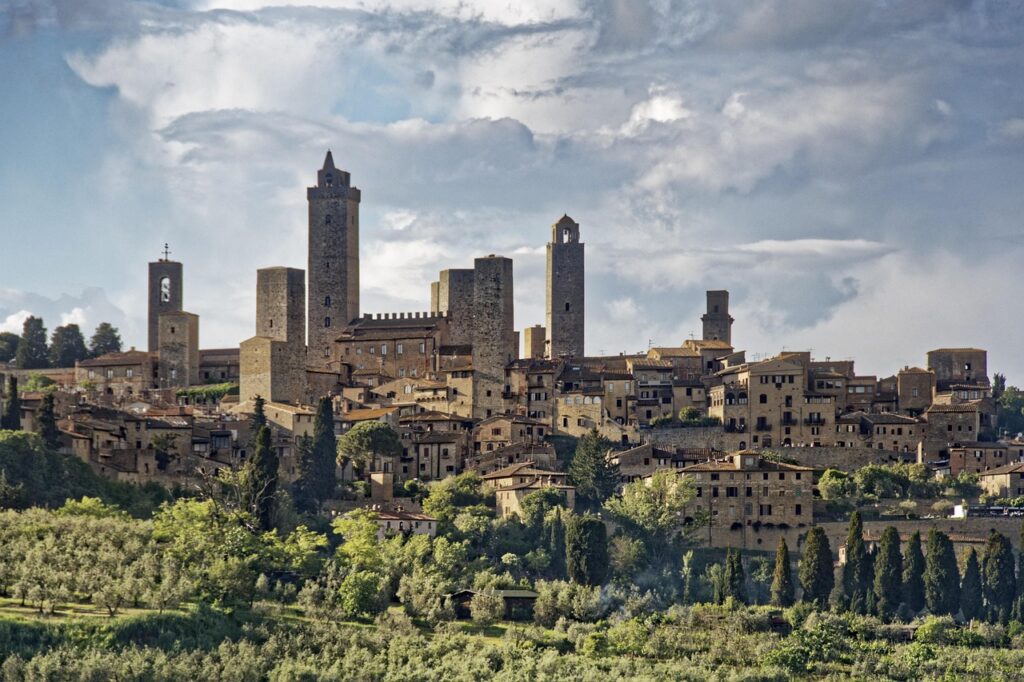
San Gimignano, the “medieval Manhattan” of Tuscany, is as much a visual playground as it is a place of taste. Perched on a hill in the heart of the Val d’Elsa, this fortified town is famous for its slender towers, cobbled lanes and, above all, an outstanding white wine: Vernaccia di San Gimignano. This introduction invites you into a sensory and practical immersion — a guide to learning how to recognize Vernaccia not only by taste, but by smell, sight, touch and cultural context. The goal: to turn a tasting into a memorable experience that ties each aroma to a place, a stone, a Tuscan light.
Starting in San Gimignano is like stepping into an open-air museum: the Torre Grossa overlooks the Piazza del Duomo and offers a vantage point that primes the palate. Vineyards fan out in terraces around the town, where limestone soils and microclimates shape Vernaccia. The interplay between terroir and human know-how gives the wine its signature. But recognizing Vernaccia requires more than knowing its history: it means exercising your senses and learning precise markers — color, viscosity, bouquet, length on the palate, and even the emotion created by the tasting context.
In this article I’ll take you on a sensory route through San Gimignano: from monuments that tell the story (Collegiata di Santa Maria Assunta, Museo Civico), to the cellars and agriturismi where Vernaccia is made and tasted. You’ll find exact addresses, typical opening times, price ranges and practical tips — how to organize a tasting, the order in which to serve the glasses, which food pairings to favour, and how to hold your glass to better capture the aromas. Each step includes immersive descriptions so you can picture the moment: golden light on a bottle, the crack of Tuscan bread, a breeze carrying dried herbs through a vineyard. This sensory approach aims to make you independent: after reading, you’ll be able to identify a Vernaccia, place its nuances according to vineyard exposure and winemaking, and above all live the San Gimignano experience fully, glass in hand.
 Click here to join a wine tasting in San Gimignano

1) Get ready: visual and contextual cues in the old town
Before you taste, look. Reading a wine begins with its container and the setting. In San Gimignano the main reference points for beginners are the Piazza del Duomo and the Palazzo Comunale (Museo Civico). The Palazzo Comunale, on Piazza del Duomo (Piazza del Duomo, 1, 53037 San Gimignano SI), houses exhibition rooms and provides historical panels about Vernaccia. Typical opening hours: 10:00–19:00 (seasonal variations apply). Indicative entrance fee to the Museo Civico: €6–10 for access to the rooms and the Torre Grossa (if included). Climbing Torre Grossa (Piazza del Duomo) gives a view over the hills where the vines grow — that visual panorama explains the variations in color and character of the wines.
Take time to study the label: the mention “Vernaccia di San Gimignano DOCG” signals the strictest quality designation. In the old town, small enoteche (wine bars) offer glasses at roughly €3–6 for 0.10–0.15 L. A reliable enoteca to know is the Enoteca di San Gimignano (Via San Matteo 6, 53037 San Gimignano SI): typical hours 11:00–22:00; tastings from around €4 a glass.
Visual tip: hold your glass against a light background (a white tablecloth or the warm yellow stone of the streets) to judge the color. Vernaccia is often pale, straw to light gold; some cuvées aged on lees or in wood may show deeper golden hues. Also note the fineness of bubbles if the wine is sparkling — a few producers make spumante versions.
Click here to book a private walking tour of San Gimignano

2) Tasting: aromas, the palate and sensory vocabulary
The actual tasting unfolds in stages: look, smell, taste, then assess the finish. Start with the visual check (see previous section), then bring the glass to your nose. Vernaccia di San Gimignano typically presents a bouquet dominated by citrus (lemon, grapefruit), sometimes green apple, and floral touches (white flowers, almond). Top cuvées show extra complexity: dried herbs, marzipan, flinty notes and even a light saline hint related to the limestone soils.
On the palate Vernaccia combines freshness with structure. Key characteristics to remember: lively but balanced acidity, a slight final bitterness (a sign of a grape variety well expressed), and long aromatic persistence. Intense aromatic persistence (I.A.P.) is a useful measure: if aromas linger 6–8 seconds after swallowing, the wine has good staying power; 10–15 seconds signals a superior cuvée. Price of a good Vernaccia bottle, depending on the producer: €8–25 for everyday cuvées, €25–60 for Riserva or special élevages.
Practical exercises: close your eyes and identify the dominant citrus, then the floral note, then the mineral aftertaste. Note the texture: is it creamy (often linked to bâtonnage/lees ageing) or rather crisp and saline? Taste in order: younger whites before riper ones; start with unoaked cuvées (under about €12) to build familiarity, then move to Riserva (longer ageing).
Click here to join a cellar tasting and class
3) Practical route: wineries, tastings and must-visit addresses
To turn theory into practice, here’s a route of wineries and tasting spots in and around San Gimignano, with addresses, approximate hours and price ranges. Book ahead, especially in high season (April–October).
- Tenuta Torciano — Via Torciano, 11, 53037 San Gimignano SI. Cellar hours: visits and tastings by reservation, typically 10:30–17:30. Guided tasting + local platter: €15–30 per person. Atmosphere: family-run estate with panoramic views, ideal for learning Vernaccia winemaking techniques.
- Azienda Agricola La Lastra — Località La Lastra, 53037 San Gimignano SI (provincial road, exit San Gimignano Sud). Hours: visits by appointment; shop open 09:00–18:00 in season. Tasting: €10–25. La Lastra often offers vineyard tours and explanations about soil geology.
- Fattoria Poggio Alloro — Località Poggio Alloro 6, 53037 San Gimignano SI. Hours: 09:00–19:00 (reservation recommended for tastings). Tasting served with olive oil and cold cuts: €12–28. Great for comparing classic Vernaccia and Riserva.
- Museo della Vernaccia (civic tasting) — Sometimes integrated as temporary wine exhibitions at the Museo Civico, Piazza del Duomo, 1. Museum hours: 10:00–19:00; wine-related exhibitions vary by schedule; entry €6–10.
Practical tips: bring a credit card and an insulated bag if you buy several bottles; many estates ship abroad but check shipping costs. Private tours cost more but provide technical immersion (oenology, vat rooms visit, barrel tastings). If you travel by bus or train, the nearest station is Poggibonsi-San Gimignano (about 12 km): taxis and shuttles provide transfers. For a longer stay, several agriturismi around the area (book via tourist offices) offer accommodation and tastings.
Click here to book a vineyard tour with tasting and lunch
Conclusion — Making Vernaccia part of your San Gimignano experience
Recognizing Vernaccia di San Gimignano is as much a sensory learning process as it is a cultural itinerary. After observing the color in the golden light of the walls, inhaling the bouquet in the shade of a medieval tower, tasting on a stone terrace and comparing several cuvées in a cellar, you’ll have reliable markers: pale to golden color, citrus and almond notes, lively acidity and a mineral persistence. But the recipe goes beyond raw sensations: it includes the place — Piazza del Duomo, Torre Grossa, the limestone hills visible from the Elsa river — and local practices, like service in an enoteca, the Vernaccia-without-salt pairing with a Tuscan pistou soup, or tasting after a sunset stroll.
Practice regularly: write your impressions in a tasting notebook (producer, vintage, serving temperature, perceived aromas). Repeat the exercise at different times of day: Vernaccia can show more herbaceous notes in the morning and fruitier aspects in the afternoon. Finally, follow a few golden rules: don’t taste heavy whites right after light ones; refresh your palate with water and plain bread; aim for 8–12 °C for most Vernaccia, 10–12 °C for Riserva that are slightly more expressive.
San Gimignano is a living school for any wine lover: its museums (Museo Civico, Collegiata di Santa Maria Assunta), towers (Torre Grossa) and cellars (Tenuta Torciano, La Lastra, Poggio Alloro) form a unique setting to learn to recognize and appreciate Vernaccia. Despite seasonal variations in prices and opening times, the rule stays the same: take your time, let your senses adjust, and let every sip tell you a story of stone, sun and Tuscan know-how. Safe travels and enjoy the tasting!
