





Introduction
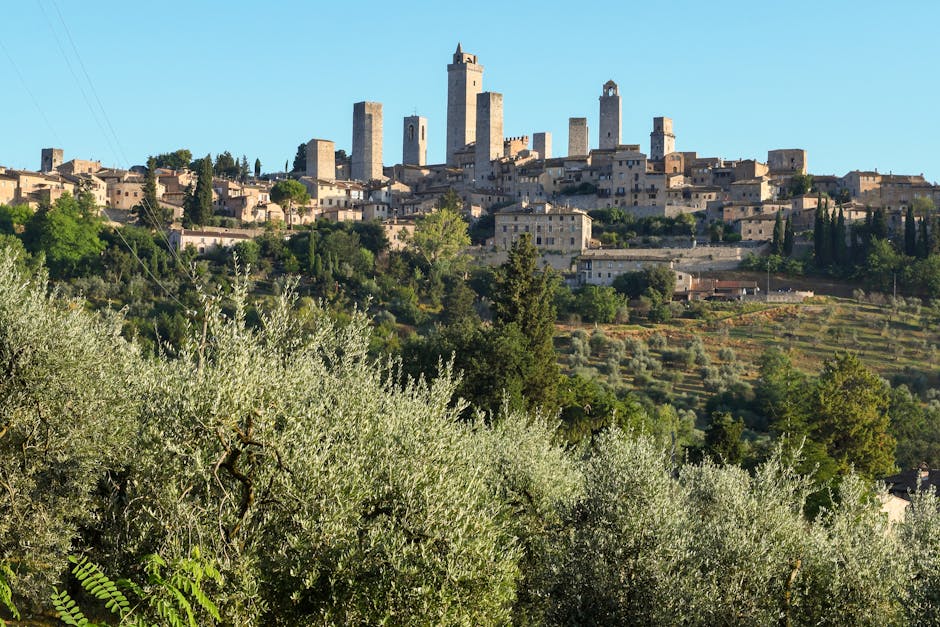
Perched on a hilltop in Tuscany, San Gimignano is a living museum for photographers who crave authentic medieval charm: its cobbled alleys, intimate squares and soaring towers make for an ideal photo circuit. This guide is designed to help you explore and photograph the town’s most iconic — and most photogenic — spots, combining practical info (exact addresses, opening hours, prices in euros) with technical tips to capture the light, texture and unique atmosphere of the town of towers.
The best way to read San Gimignano is on foot. The main sights cluster around Piazza del Duomo and Piazza della Cisterna, but the narrow lanes, stairways and viewpoints are where you’ll find the most memorable images. To get the most out of your photo walk, this guide lays out logical routes, recommended times for the light, details on paid entries (e.g. Torre Grossa and the museums) and tips to avoid the crowds. You’ll also find lens suggestions, camera settings and composition ideas tailored to the scenes you’ll encounter: stone towers against the sky, ochre façades bathed in low light, silhouettes in narrow streets and sweeping views of the Tuscan countryside.
San Gimignano attracts many visitors, especially in high season (April–September). The town gates, like Porta San Giovanni (Via San Giovanni, 53037 San Gimignano SI, Italy), provide perfect framing with the countryside behind. For urban shooters, a stop at the museums will add variety to your subjects: the Museo Civico and the Torre Grossa (Palazzo Comunale, Piazza del Duomo, 53037 San Gimignano SI, Italy) offer sweeping views from the top. Prices and opening hours change with the season; this guide includes typical indications and common time windows so you can plan your sessions efficiently. Finally, local tips — best hours, areas to favor, respectful behavior to adopt — round out this tour so you can return with a powerful, respectful series of images.
1) Morning route: alleys, squares and low-angle light
Start early to take advantage of the soft morning light and a relatively empty town. Begin at Porta San Giovanni (Via San Giovanni, 53037 San Gimignano SI, Italy) at sunrise to capture the town’s silhouette against the rolling countryside. Then walk toward Piazza della Cisterna (Piazza della Cisterna, 53037 San Gimignano SI, Italy), the triangular square famous for its central well and medieval stone façades. In the morning (roughly 6:30–9:00 depending on season), side light brings out the texture of the walls and reveals the cobbles’ relief.
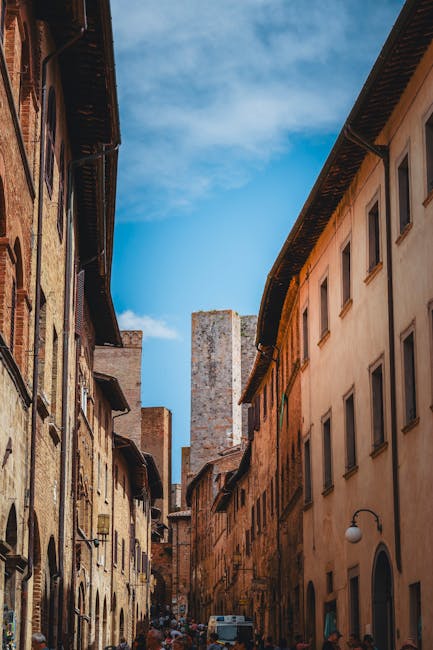
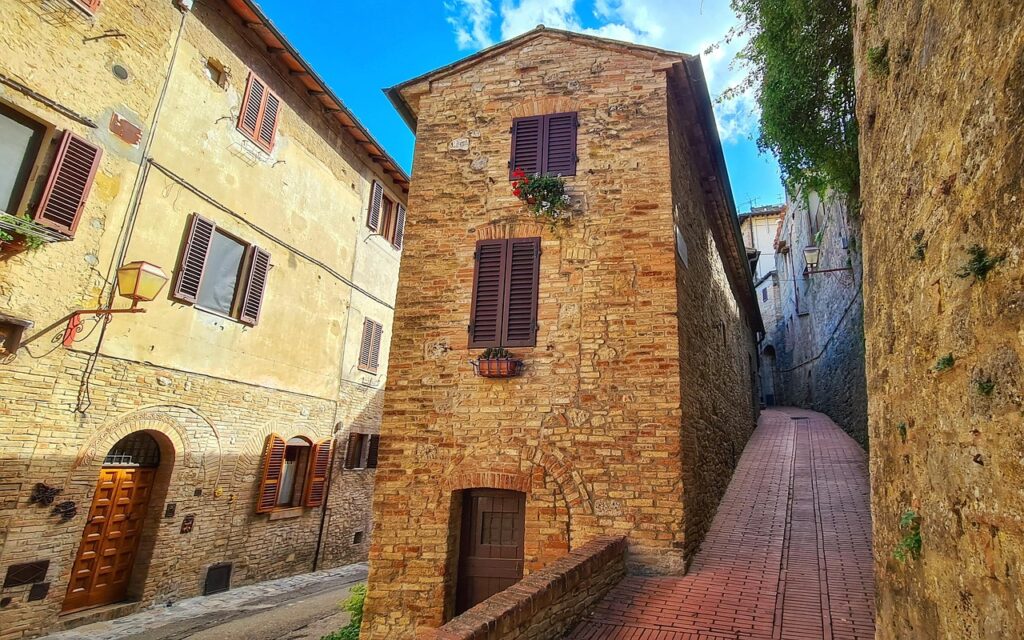
From Piazza della Cisterna, explore the nearby narrow streets: Via San Matteo, Via del Castello and Via delle Romite. These tight lanes offer intimate backlit scenes, architectural details and slices of daily life. Use a 24–70mm for general views and a 50mm or 85mm to isolate details (wooden doors, signs, fountains). Recommended settings: ISO 100–400, aperture f/5.6–f/11 to keep textures sharp, and shutter speed adapted to the light (1/125s or faster to freeze passersby).
Hours and costs: the town itself is open 24/7. However, outdoor parking areas (for example Parking Via San Matteo, Via San Matteo, 53037 San Gimignano SI) open early and usually cost €1–2 per hour; a full-day rate can reach €10–15 depending on the period. Local tip: arrive before 9am in high season to avoid tour buses and enjoy dramatic long shadows.
2) Towers and viewpoints: Torre Grossa, the Rocca and vantage points
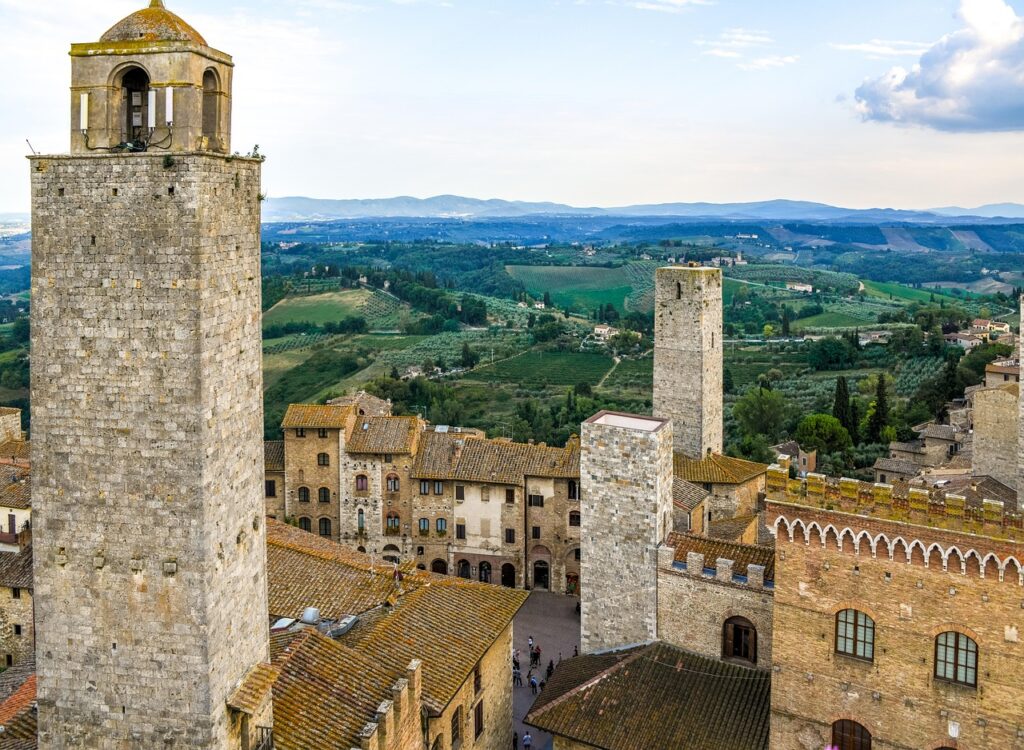
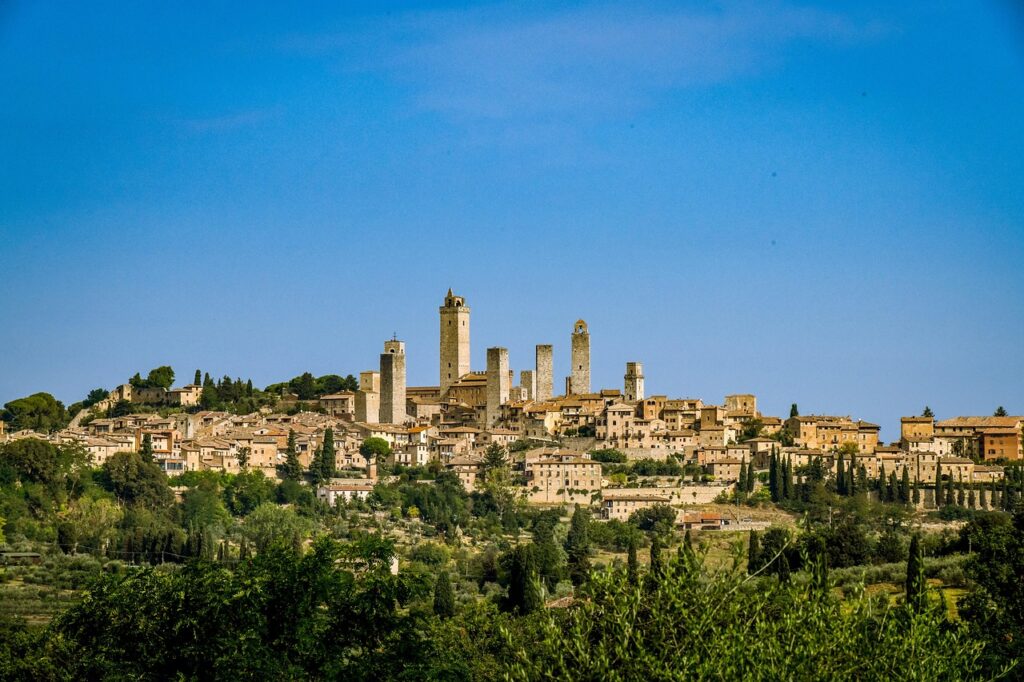
For aerial shots and views over the towers, climb the Torre Grossa (Palazzo Comunale, Piazza del Duomo, 53037 San Gimignano SI, Italy). Practical info: Torre Grossa is typically open from 10:00 to 19:00 from April to October and from 10:00 to 17:00 from November to March; combined ticket Torre Grossa + Museo Civico is around €9.00 for an adult (reduced rates for students/children — check the official site). From the top, favor a 35–70mm range to capture the alignment of towers and the patchwork of red-tiled roofs.
Another excellent viewpoint is the Rocca di Montestaffoli (Via Rocca, 53037 San Gimignano SI, Italy). Access to the fortress and its terrace offers a perfect framing of the Elsa valley and the towers rising out of town. Entry to the Rocca can be free or subject to a small fee (generally €4.00–€6.00 depending on the exhibition); typical hours: 09:30–18:30 in season. Photo tip: late afternoon’s warm light sculpts the towers and the valley appears in layered bluish tones — ideal for telephoto lenses (70–200mm).
Technique and composition: to create visual depth, include foreground elements in your frame (walls, cypress trees, balustrades). Use a polarizing filter to deepen sky/cloud contrast and reduce reflections on tiles. If you plan to photograph the town as a panorama, shoot several vertical frames with about 25–30% overlap and stitch them in post-production for a sharp, detailed final image.
3) Culture, museums and architectural details
To enrich your portfolio with interiors and artworks, visit the Museo Civico e Torre Grossa (Palazzo Comunale, Piazza del Duomo, 53037 San Gimignano SI, Italy) and the Museo San Gimignano 1300 (Via Costarella 7, 53037 San Gimignano SI, Italy). The Museo San Gimignano 1300 features a polychrome model of the medieval town; exact address: Via Costarella 7, 53037 San Gimignano SI, Italy. Typical hours: 10:00–18:00 (may vary), entrance fee around €8.00 per adult. The Museo Civico is generally included in the Torre Grossa ticket (see previous section).
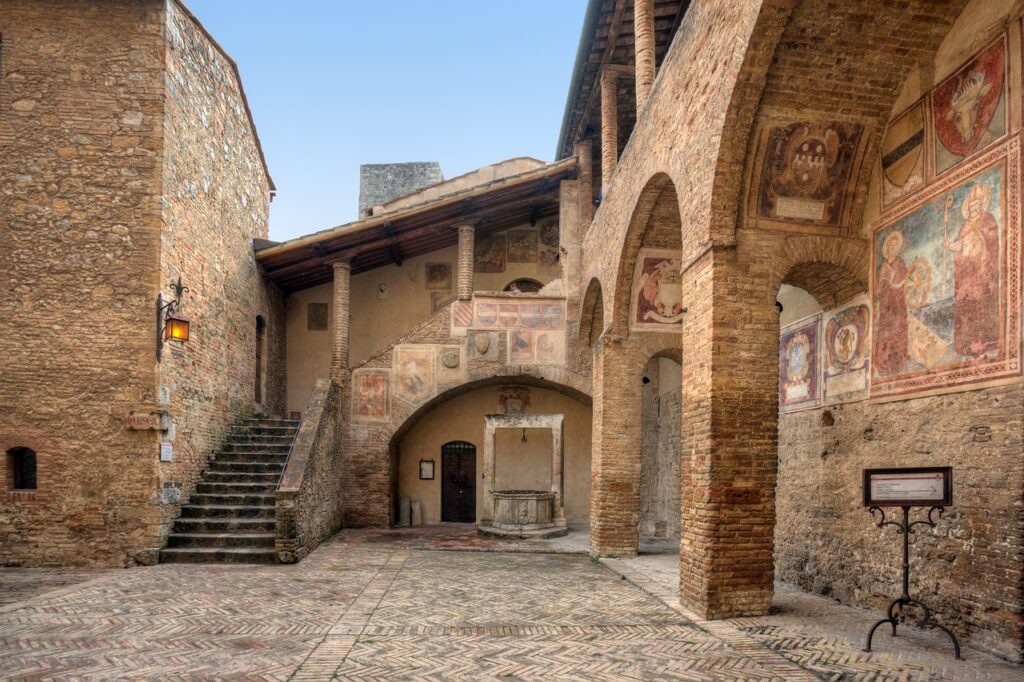
Inside the Collegiate Church, the Collegiata di Santa Maria Assunta (Piazza del Duomo, 53037 San Gimignano SI, Italy), you’ll find spectacular medieval fresco cycles. Address: Piazza del Duomo, 53037 San Gimignano SI, Italy. Entry is often charged: around €5.00 per adult; hours: 10:00–17:00 off season, extended in summer. Photographing inside usually comes with restrictions (no flash, and in some areas photography may be prohibited) — check at the desk and adapt your settings: ISO 800–3200, fast lens (35mm f/1.8 or 50mm f/1.4) and a tripod if allowed (often forbidden; prefer a discreet monopod).
Local tip for details: look for friezes, keystones and gargoyles. Get close to carved doors, iron handles and stone plaques to capture the patina of centuries. These elements tell San Gimignano’s story and add a variety of textures to your photo report.
4) Street scenes, food and environmental portraits
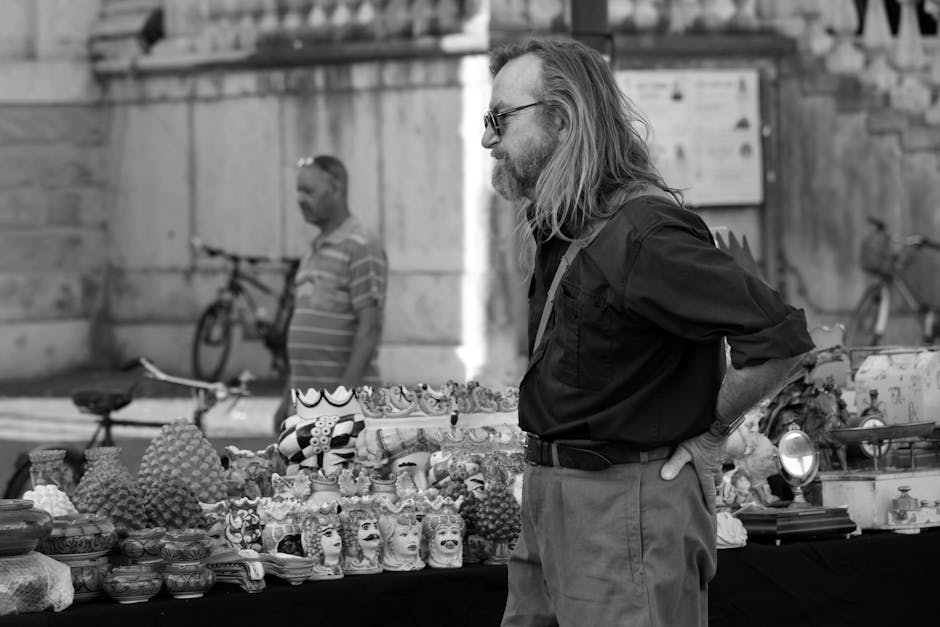
Afternoon and early evening are perfect for capturing urban life: artisans, cafés, market stalls and passersby. The streets around Piazza del Duomo and Piazza della Cisterna feature shop windows, local craft stores and gelaterie (for example Gelateria Dondoli, Piazza della Cisterna 4, 53037 San Gimignano SI, Italy). Gelateria Dondoli is well known; a gelato generally costs between €3.00 and €5.00 depending on size. These scenes lend themselves to environmental portraits: include the architecture to give a sense of place.
Portrait technique: use a wide aperture (f/2.8–f/4) to separate the subject from the background while keeping enough context. Interact with your subjects (ask permission); a smile and a business card often encourage shopkeepers to pose. For food shots and culinary details, compose using natural window light; keep ISO low and aperture moderate (f/4–f/5.6) to get sufficient depth of field.
Practical advice: respect residents’ daily lives. Avoid intrusive poses and favor verbal exchanges. Make the most of the golden hour (just after sunset) on the town’s terraces, particularly on the east side, to capture façades in warm light and long shadows. Restaurants and cafés tend to stay open late; most serve until 22:00–23:00 in summer. Local tip: buy a coffee or a drink if you plan to photograph inside an establishment — it’s a courtesy that often makes shooting easier.
Conclusion
San Gimignano is an exceptional playground for photographers: medieval towers, picturesque alleys, museums full of art and sweeping views of the Tuscan countryside. This guide has given you a logical route — from sunrise to sunset — with precise addresses (Porta San Giovanni, Piazza della Cisterna, Piazza del Duomo, Via Rocca, Via Costarella 7), indications on typical hours and fees (Torre Grossa and Museo Civico ≈ €9.00, Museo San Gimignano 1300 ≈ €8.00, Collegiate Church ≈ €5.00), plus technical and local tips to maximize your images.
For a successful photo circuit, combine preparation with flexibility: check official opening times before your visit (they can vary with seasons and events), arrive early for the best light and the fewest people, and bring complementary lenses (wide 16–35mm, versatile 24–70mm, telephoto 70–200mm for tower compression, and a 50–85mm for portraits). Also respect the town and its inhabitants — photography in San Gimignano is richer when you include people with kindness.
Finally, don’t forget to back up your images each evening and note the exact locations of your shots (street, square, orientation): this will make post-processing and creating a coherent portfolio much easier. San Gimignano reveals itself to mindful travelers and patient photographers alike: take the time to listen to the town, study the light and return to previous spots to discover new compositions. Have a great photographic journey and happy shooting in this medieval Tuscan gem!