

Introduction: Dive into the medieval soul of San Gimignano
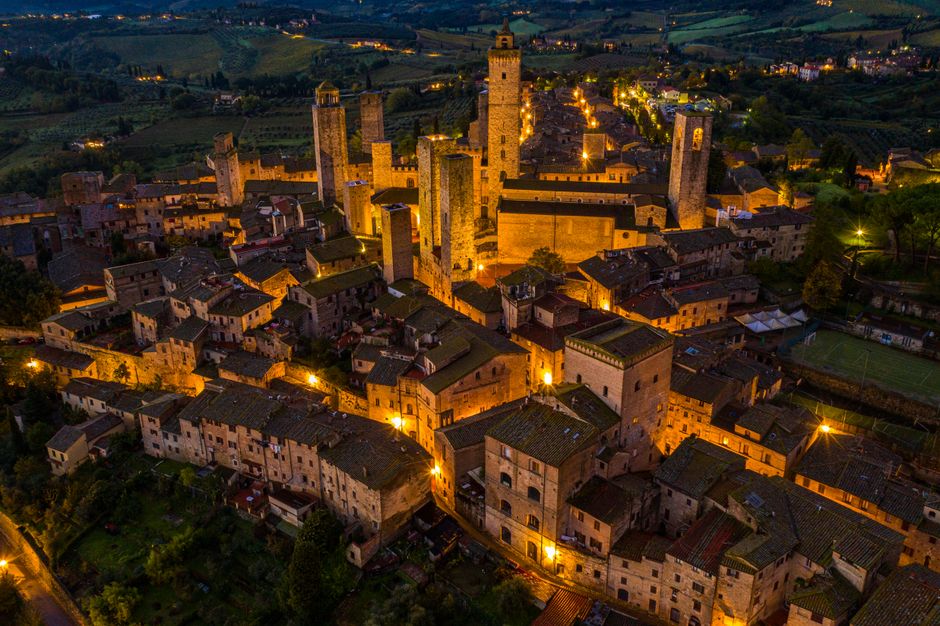
San Gimignano is one of those Tuscan villages that seems frozen in time: a fascinating cluster of medieval towers, cobbled lanes, sunlit squares and panoramic views that stretch the Sienese countryside like a watercolor. Sitting on the Via Francigena between Florence and Siena, the town grew in the Middle Ages as a trading hub and a stop for pilgrims; today it draws travelers, photographers and wine lovers who come for its architecture, museums and terroir—most famously the white wine Vernaccia di San Gimignano.
In this practical, all-purpose guide I’ll take you on an immersive route: the must-see spots, exact addresses, up-to-date opening hours and prices, detailed descriptions to help you feel each place, and local tips so you can experience the town like a resident. You’ll find useful info on museums such as the Collegiata di Santa Maria Assunta (Duomo di San Gimignano), the Torre Grossa and the Museo Civico, plus suggestions for walks, tastings and tasty stops—with precise addresses like the famous Gelateria Dondoli on the Piazza della Cisterna.
San Gimignano is compact; it’s easy to explore on foot. Yet every corner moves to its own rhythm: the central square, craft shops and viewpoints each offer different moods throughout the day. Mornings bring a calm perfect for photographing the towers without crowds, midday bathes the ramparts in golden light, and evenings see the lanes come alive with that gentle Tuscan atmosphere ideal for wandering and grabbing a drink after sunset. This guide gives you not only addresses and prices in euros, but also time-based recommendations to optimize your visit (for example, avoid the midday crush on the Piazzetta) and money-saving tips—like buying a combined ticket for the museum and tower.
Finally, I’ll guide you through the art of tasting San Gimignano: where to drink a well-served Vernaccia, where to stop for a focaccia, how to spot the best panorama spots off the beaten path, and how to book guided tours or tastings. My goal is for you to leave San Gimignano not just with photos but with a deeper understanding of its history, textures, flavors and local rituals. Expect to climb stone steps, breathe in the faint scent of old paint in tiny chapels, and savor an artisanal sorbet while watching the towers pierce the Tuscan sky.
Towers, viewpoints and panoramas: how to see San Gimignano from above
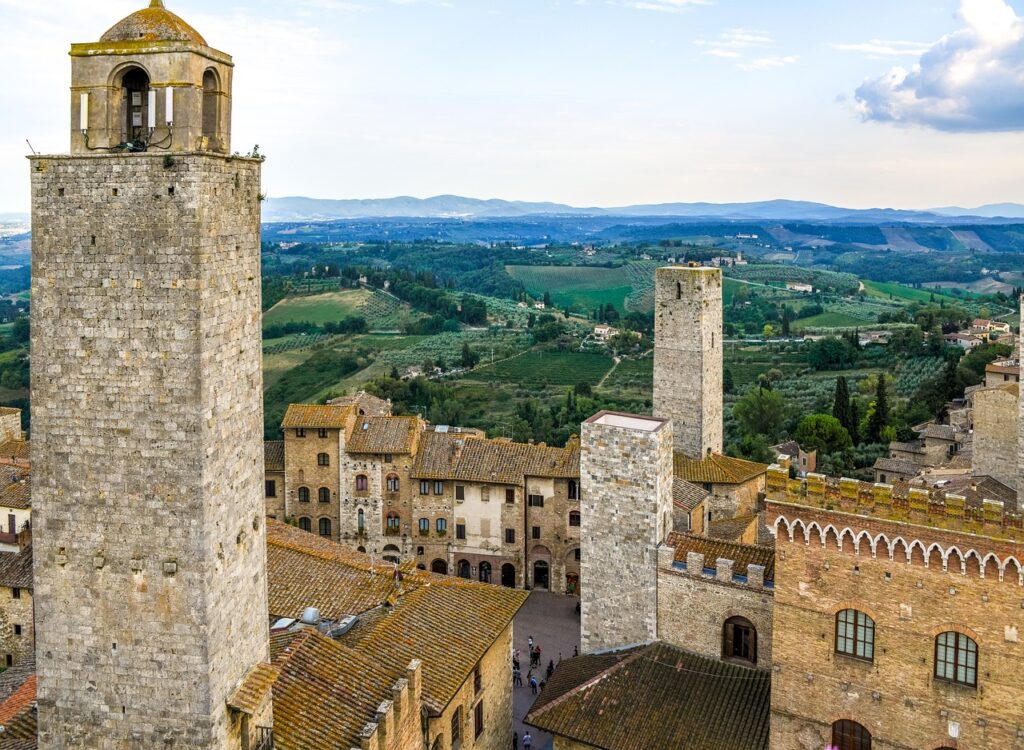
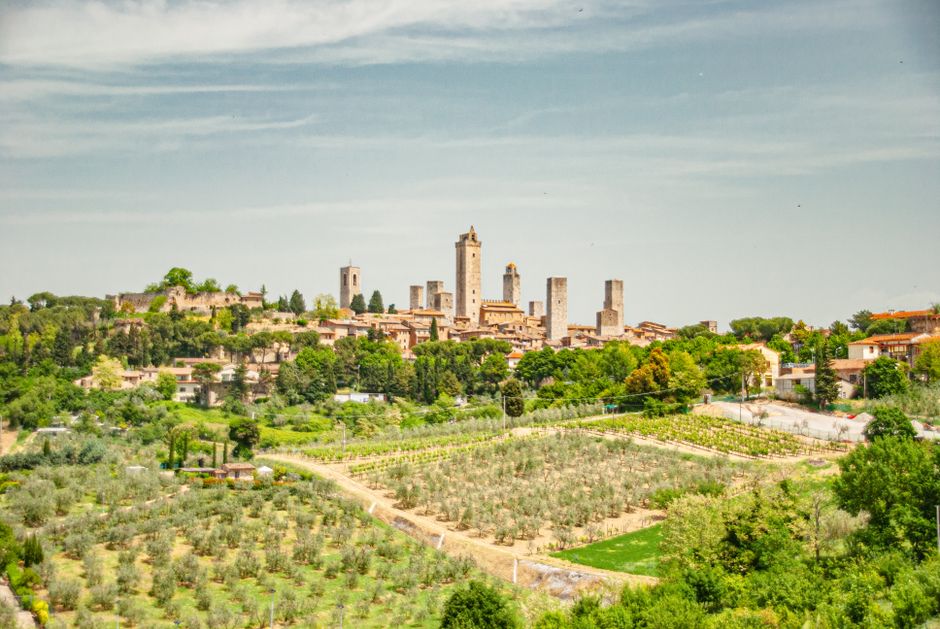
The iconic image of San Gimignano is its skyline of medieval towers: once around fifty, today fourteen still dominate the town. To appreciate that vertical drama, two experiences are essential: climbing the Torre Grossa and walking up to the Rocca di Montestaffoli. The Torre Grossa (via Piazza del Duomo, 1, 53037 San Gimignano SI, Italy) is the highest tower open to the public. The Combined ticket Museo Civico + Torre Grossa typically costs €9.00 for adults; reduced rate €6.00 for students and seniors; free for children under 6. Approximate opening hours: April–October 10:00–19:00, November–March 10:00–17:00. The ascent is via a narrow stone staircase: allow 20–30 minutes between queueing and climbing, depending on crowd levels.
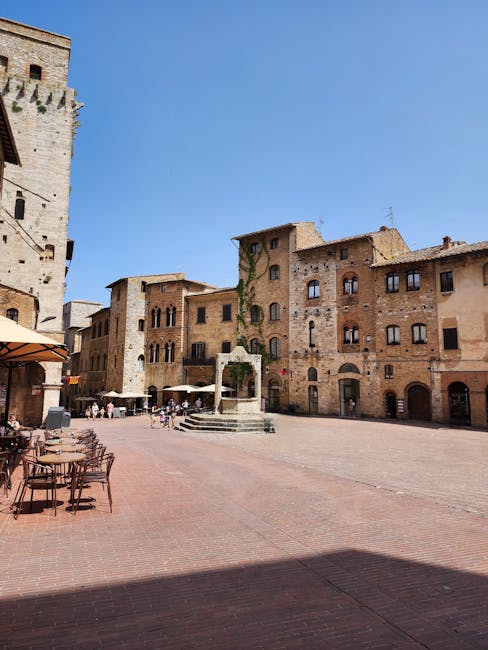
The Rocca di Montestaffoli (entry from Via S. Matteo, near the public gardens) offers a 360° panorama of the surrounding hills—perfect at sunset. Access to the gardens is free; the path includes steps and grassy areas. For a highly graphic view, head to the Piazza della Cisterna early in the morning (Piazza della Cisterna, 53037 San Gimignano SI): from the square’s paving you can compose shots framing the towers and the central fountain.
Practical tips: to avoid the crowd, climb the Torre Grossa before 10:30 or after 17:00 in high season. Bring a bottle of water (there are no vendors on the tower), wear sturdy shoes for the stone steps and carry a small cloth to protect your camera from dust. If you’re hunting for the perfect wide-angle shot, go through Porta San Giovanni and follow Via di Castello toward the countryside: some unofficial viewpoints offer unobstructed perspectives without the usual barriers.
The historic heart: squares, churches and must-see museums
San Gimignano’s historic centre is rich in small-scale masterpieces. The Collegiata di Santa Maria Assunta (Duomo di San Gimignano) sits on the Piazza del Duomo, 1, 53037 San Gimignano SI. Entrance to the church is often free, but the museum complex (Museo Civico, painting rooms) is included in the combined ticket of €9.00. The Duomo’s interior is renowned for its 14th-century frescoes (cycles of Genesis and scenes from the Virgin’s life): take time to study the colorful details and Latin inscriptions.
The Museo Civico e Pinacoteca (also on the Piazza del Duomo) displays paintings, medieval artifacts and civic objects. Typical hours: 10:00–18:00 (closed Mondays in low season; check the official site before you go). The museum provides explanatory panels in Italian and English; audio guides may be available at the ticket desk for around €3.00–5.00.
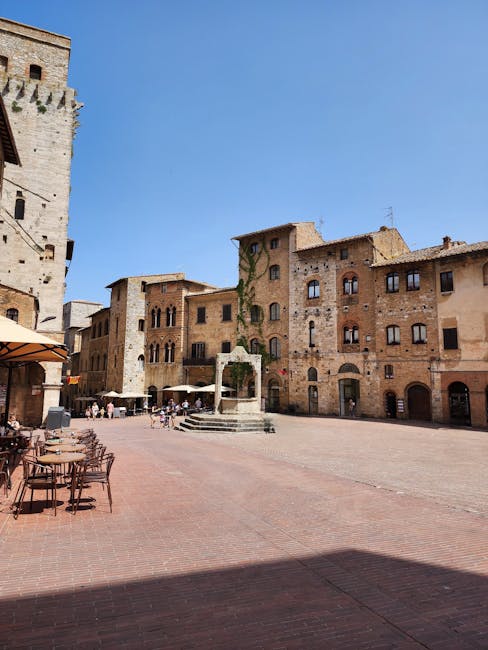
A short walk away, the Piazza della Cisterna (Piazza della Cisterna, 53037 San Gimignano SI) is the most photographed square, with its colorful houses and octagonal fountain. Wander slowly through adjacent lanes like Via San Giovanni and Via delle Mura: you’ll find craft shops, ceramics workshops and galleries. When the local market is on, it’s the perfect place to buy olive oil, aromatic herbs and handmade products.
Tips: avoid visiting the museum between 12:30 and 14:30, common staff break times. For a quiet, reflective moment, arrive early and enter the Duomo at opening. If you want to deepen your medieval knowledge, look for explanatory signs near the city walls and consider a guided tour of about 90 minutes (indicative price €10–15 per person for a small group).
Food, sweet stops and tasting Vernaccia: where to eat and drink
San Gimignano’s cuisine blends rustic simplicity with top-quality ingredients. For an essential gelato stop, go to the Gelateria Dondoli (Piazza della Cisterna, 19, 53037 San Gimignano SI). Typical prices: single scoops between €2.50 and €3.50, special cups €4.50–8.00. The terrace looks directly onto the square—perfect for people-watching while trying inventive flavors (saffron, ricotta and pear, Vernaccia sorbet).
For a traditional lunch, Trattoria Chiribiri (Via San Matteo, 16, 53037 San Gimignano SI) serves homemade pasta, truffle dishes and honest value. Expect €12–18 for a main course. Typical hours: 12:00–15:00 and 19:00–22:00 (sometimes closed on Wednesdays).
The area is famous for its white wine, Vernaccia di San Gimignano. For an organized tasting, Tenuta Torciano (Via di Torciano, 42, 53037 San Gimignano SI) offers tours and tastings of wines and olive oils. Prices: basic tasting around €15.00 per person; a more comprehensive guided visit €25–30. Hours: visits by reservation, generally 10:00–18:00. Book ahead via the website or phone, especially in high season.
Local tips: for a memorable picnic, pick up bread, pecorino and tomatoes from a local shop and settle on the ramparts or in the public gardens near the Rocca. For dinner, don’t risk high season without a reservation—popular restaurants often fill up by 20:00 in summer. And remember: Vernaccia is best served chilled but not ice-cold (10–12 °C), which lets its almond, citrus and delicate mineral notes shine.
Getting around, where to sleep and practical tips for a smooth stay
San Gimignano is best explored on foot; motor vehicles are restricted at the town entrance by ZTLs (limited traffic zones). Main paid parking lots sit along the ramparts: Parcheggio La Stazione (Via San Matteo, 53037 San Gimignano SI) and Parcheggio Camper near Porta San Giovanni. Approximate rates: €3–5 per hour in the center, day rates €10–15 depending on season. Buses by SITA connect San Gimignano with Florence and Siena; check timetables in advance as frequency varies by season.
For accommodation, San Gimignano offers a wide range: boutique hotels in the center, agriturismi on the outskirts and rustic B&Bs. Your choice will depend on the vibe you want: stay in a small hotel steps from the Piazza del Duomo to be at the heart of history, or choose a farmhouse 5–10 km out for peace, scenic views and often a homemade breakfast.
More practical tips: pack a light jacket even in summer for cool evenings; protect yourself from the sun during daytime walks; carry some cash (euros) for small purchases and tips—some artisans don’t accept cards. If you’re cycling, check routes and surface conditions; many tracks are gravel. Finally, respect the historic setting: don’t climb on walls, avoid noisy groups in narrow lanes, and support local businesses by buying crafts and regional products.
Conclusion: Take San Gimignano home with you
San Gimignano is more than a collection of medieval towers: it’s a historic microcosm where architecture, food and landscape answer each other. Following this guide you’ll have the practical details—exact addresses, prices in euros, indicative opening hours—to plan an efficient and immersive visit. Climb the Torre Grossa to overlook the hills, lose yourself in the Duomo’s frescoes, enjoy an award-winning gelato on the Piazza della Cisterna and book a Vernaccia tasting to understand the intimate link between terroir and local culture.
Every visit deserves its own pace: some travelers will prefer the buzz of a full summer day, others the calm of a longer off-season stay. Whatever your approach, keep in mind the practical tips shared here: book ahead in high season, avoid peak times for the most popular sites, favor local shops and respect the heritage environment. San Gimignano rewards those who pay attention to details—the motifs of a fresco, the texture of a worn stone, the complexity of an aged white wine.
Finally, go with the curiosity of a traveler and the patience of an art lover: the vistas are worth waiting for, small tables deserve to be tasted, and hidden lanes sometimes reveal views more intimate than any postcard. San Gimignano will give you lasting memories: indelible images, lingering flavors and the feeling of having experienced an authentic stop in medieval Tuscany. Safe travels, and don’t be surprised if you want to return—each season shows a new face of this timeless town.