


Introduction: San Gimignano, between bell towers and battlements
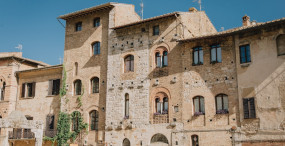
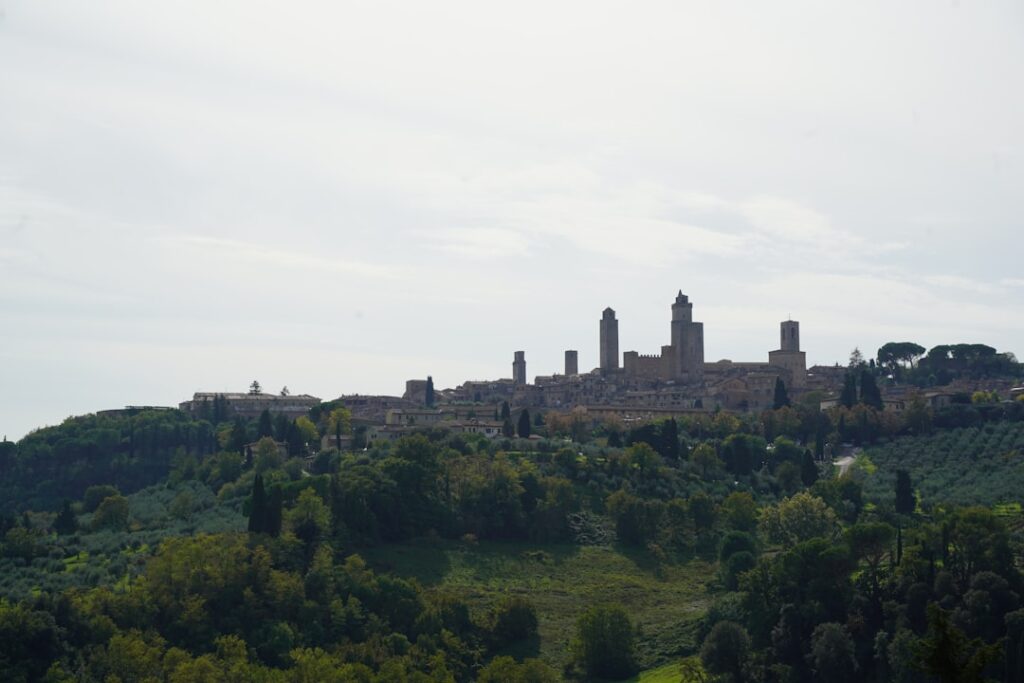
Perched on a hill in the Val d’Elsa between Florence and Siena, San Gimignano is often called a « medieval Manhattan » for its skyline carved by about a dozen towers. But beyond that striking profile, this small Tuscan town is a living book of faith, sacred art and popular devotion from the 13th and 14th centuries. Its religious heritage — parish churches, oratories, chapels painted with frescoes — is closely intertwined with those defensive towers which, originally, were as much symbols of family power as they were urban landmarks charged with religious meaning. To understand San Gimignano is to read a landscape where spirituality and civic prestige answer each other on every corner.
A religiously-focused visit to San Gimignano brings you face to face with works by famous names and anonymous workshop masters alike: fresco cycles, polyptychs, altarpieces and liturgical furnishings tell the story of daily devotion in a medieval and early modern community. The Collegiata di Santa Maria Assunta (the Duomo) houses remarkable fresco cycles (biblical scenes and lives of the saints), while churches such as Sant’Agostino, San Lorenzo and the Oratorio di Sant’Antonio offer complementary periods, styles and functions. At the same time, the towers — Torre Grossa, Torre dei Salvucci, Torre Rognosa, Torre del Diavolo and others — preserve the material memory of a social competition where patrician families expressed their piety as publicly as their power.
This article offers a deep-dive itinerary full of precise addresses, opening hours, indicative prices and practical tips to help you make the most of these treasures. Whether you’re into sacred art, heritage photography, curious pilgrim or discerning traveler, you’ll find immersive descriptions here: how to step into the dim of a chapel, spot marks of wax and prayer, climb a tower to embrace the Tuscan panorama, and where to shelter for a caffè after a morning of sightseeing. Practical information includes tips for visiting outside peak tourist hours, access details, safety advice for climbing narrow tower stairways, and ideas for pairing religious discovery with local tastings (Vernaccia di San Gimignano wine, extra virgin olive oil, pecorino) that extend the sensory experience.
Before we get to the monuments, note that opening times and prices may change with season and liturgical events: it’s recommended to check official sites or call ahead to confirm. Still, the details below are based on the most recent public information and on established visiting practices in San Gimignano. Pack comfy shoes, your camera, and a curiosity for history: the encounter between the sacred and the towers awaits.
History, architecture and religious meaning of the towers
The towers of San Gimignano are more than defensive structures; they’re woven into the city’s religious and social fabric. Originally (11th–13th centuries) they were symbols of family power, built by patrician families to assert status and wealth. But early on many of these structures became tied to religious functions: private chapels, votive niches, domestic bell towers, or supports for sacred banners during patronal feasts. This overlap between secular power and sacred presence is visible in the urban layout: the Piazza del Duomo, the central place of worship, is ringed by palaces and towers, underlining the close mix of civic and religious spheres.
Architecturally, the medieval towers of San Gimignano are built from local stone, massive at the base and often pierced at mid-height by narrow openings for light and defense. Their plain exteriors contrast with the rich interiors of nearby churches: you can step from a near-feudal street into the golden clarity of a nave where frescoes unfold in narrative sequences. Construction techniques — regular stone courses, bonding layers, shoring devices — reflect artisanal know-how passed among Tuscan workshops.
Religiously, towers sometimes served as makeshift bell towers to ring bells in spiritual emergencies (processions, calls to prayer, plague announcements) and as places to hang sacred banners during patronal festivities like the feast of San Gimignano on December 31 or local sagre. Pilgrimages and medieval routes — paths toward Rome and trade roads — placed the town within a wider spiritual geography; donating or restoring a tower could be an act of public piety. Finally, the view from a tower — sweeping over Tuscan hills, vineyards and olive groves — invites contemplation, a panoramic form of prayer.
 Click here to book a private walking tour of San Gimignano

Main places of worship: descriptions, addresses and opening hours
Collegiata di Santa Maria Assunta (Duomo)
– Address: Piazza del Duomo, 1, 53037 San Gimignano SI, Italy.
– Hours (indicative): usually open daily from 10:00 to 17:30 (longer hours in high season, check before visiting). Religious services (masses) follow the parish schedule; expect Sunday morning and holiday celebrations.
– Price: entry to the complex (Collegiata + Museo Civico/Torre Grossa) is often via a combined ticket around €9–12 for adults; reduced fares for students/young people and free entry for children according to local rules. Some areas may require a separate ticket for guided fresco visits.
– Immersive description: the Collegiata is the spiritual heart of the town. Inside, the gilded dim of the side chapels is animated by narrative fresco cycles (Old Testament scenes, the Passion, Last Judgments) where medieval polychromy and gold highlights lend dramatic intensity to the visual liturgy. The floor worn by centuries of footsteps, the scent of wax and old wood, and the scuffed pews all speak of uninterrupted prayer. Photograph carved capitals and let your eyes travel along biblical scenes painted by local masters.
Click here to explore San Gimignano with a private guide

Basilica di Sant’Agostino
– Address: Piazza Sant’Agostino, 3, 53037 San Gimignano SI, Italy.
– Hours (indicative): usually open 9:00–12:30 and 15:00–18:30; times change according to services.
– Price: most liturgical spaces are free to enter; some chapels or temporary exhibitions may ask for a donation or a small ticket (€1–5).
– Immersive description: Sant’Agostino stands out with its austere facade and single nave, which is bathed in slanting light on autumn mornings. Inside, frescoes and altarpieces are arranged to guide meditation: scenes of the Virgin, local saints and a central altarpiece nurture parish devotion. The pews testify to a living liturgy; ask in the sacristy if you’d like to attend a mass or a guided visit.
Oratorio di San Bartolo and Oratorio di San Giovanni (small oratories)
– Addresses: Oratorio di San Bartolo — Via San Giovanni, 6, 53037 San Gimignano SI; Oratorio di San Giovanni — near Piazza delle Erbe (exact access address may vary).
– Hours: often open during the day, sometimes closed for maintenance; best times to see the interiors are late morning and afternoon (10:00–17:00).
– Price: usually free or by voluntary donation (€1–3).
– Immersive description: these small oratories preserve frescoes of popular devotion and ex-voto. The walls are decorated with intimate scenes, sometimes damaged but with a particular intensity: votive offerings, pious inscriptions and touches of color that speak of domestic and communal piety.
Iconic towers: access, addresses, prices and tips for climbing
Torre Grossa (Palazzo Comunale)
– Address: Piazza del Duomo, 1, 53037 San Gimignano SI, Italy (access via the Museo Civico / Palazzo Comunale).
– Hours (indicative): generally open daily from 10:00 to 19:00 in summer; reduced hours off-season (10:00–17:00). Closed in extreme weather.
– Price: combined Museo Civico + Torre Grossa + Collegiata ticket around €9–12 for adults; discounts for students and groups; possible family tickets. Tower ascent is often included with the museum ticket.
– Immersive description and tips: Torre Grossa, the tallest tower in San Gimignano (about 54 meters), offers a breathtaking panoramic view of terracotta roofs, vineyards and the Tuscan hills. The internal staircase is wide but has uneven, sometimes slippery steps: wear closed shoes and supervise children. Opt for early morning or late afternoon for the softest light and less backlighting in photos. Allow 15–30 minutes for the climb and to savor the panorama — longer if you’re photographing in detail.
Click here to book a half-day trip to San Gimignano from Florence

Torre dei Salvucci and other minor towers
– Address (Torre dei Salvucci): Via Salvestrino? (Secondary towers are scattered through the urban fabric; spot them from Piazza del Duomo and the perpendicular streets).
– Hours and price: most private towers are not open to the public or only open during specific events (heritage days, guided tours). Ask at the Ufficio Turistico for details.
– Immersive description and tips: approaching the lesser-known towers means wandering lanes where your footsteps echo and summer birdsong mingles with the stones. Some towers still have votive niches, small windows and traces of medieval restorations. To grasp the variety, take a guided walk: a local guide will tell you who lived in each tower, which families dominated which streets, and the ties between house-towers and parish chapels.

Safety and respect tips
– Hydration: exposed staircases and sun-warmed stone in summer mean you should carry a water bottle.
– Liturgical respect: during mass avoid noisy sightseeing in churches and follow staff instructions. Some places require covered shoulders and knees to enter.
– Photography: flash is often prohibited in churches to protect frescoes. When in doubt, ask.
– Booking: for Torre Grossa and certain guided tours, online or phone reservations are recommended in high season to avoid queues.
Guided tours, museums and resources: exact addresses, hours and useful prices
Museo Civico and Torre Grossa (Palazzo Comunale) — practical information
– Address: Piazza del Duomo, 1, 53037 San Gimignano SI, Italy.
– Hours (indicative): generally open 10:00–19:00 in high season; reduced hours off-season. Weekly closures vary (check the official site).
– Price: combined Museo Civico + Torre Grossa + Collegiata ticket ~€9–12; separate tickets may be required for temporary exhibitions. Reduced rates for groups and under-18 visitors.
– Immersive description: the Museo Civico traces San Gimignano’s civil and religious history: sculptures, documents, liturgical objects, old plans and models. Before climbing the Torre Grossa, browse the rooms to get the historical context for the buildings and frescoes. The route from museum to tower often runs through ancient stairways and loggias, where the urban atmosphere shifts: from museum hall to aerial view, the experience is complete.
Ufficio Informazioni Turistiche – Tourist Office
– Address: Via San Matteo? or Piazza del Duomo (the office sits near the main entrances to the historic center) — check the information board on arrival for the exact location.
– Hours: often open daily in tourist season (9:30–18:00), reduced hours off-season.
– Services: ticketing, multilingual brochures, guided tour bookings (walking, themed religious tours), parking and shuttle information, and advice on off-site religious walking routes.
– Tips: pick up a paper map to navigate the medieval lanes if your phone signal is weak; ask about themed guided tours (frescoes, towers, liturgical art).
Local practical tips: when to come, where to eat, pairing heritage and terroir
Best times to visit
– Low season (November–March): fewer crowds, cool soft light ideal for church interiors; watch for reduced opening hours.
– High season (May–September): long days, extended opening hours but queues and crowds. Aim for early morning (at opening) or late afternoon for Torre Grossa.
– Religious events: attending a Sunday mass or a patronal feast can add depth to your visit but may close access to some chapels; check with the Tourist Office.
Where to eat and drink near the religious sites
- Osteria del Carcere (Via San Matteo) — traditional Tuscan dishes, local plates like ribollita and ragù pasta; handy after a Duomo visit. Price: mains €12–18.
- Trattoria Chiribiri (Via S. Giovanni?) — antipasti and local wines (Vernaccia di San Gimignano). Price: main courses €10–20 depending on the dish.
- Cafés and gelato shops around Piazza del Duomo for a quick espresso or artisan gelato after climbing the tower. Prices: espresso €1–2, gelato €2–4.
Transport and parking tips
– By car: several paid car parks surround the historic center (Parcheggio Giubileo, Parcheggio Centro). Expect €2–3 per hour in high season; daily rates vary (€6–12).
– Shuttles: shuttle buses from the car parks run frequently in high season, making the short climb to the medieval gates.
– On foot: the hilly layout requires a good level of fitness; wear comfortable shoes. Most lanes are cobbled.
Click here to book a wine and local products tasting

Conclusion: experiencing San Gimignano through prayer, panorama and heritage
San Gimignano offers a full travel experience where religious architecture and medieval towers converse at every step. Entering the Collegiata di Santa Maria Assunta means plunging into a pictorial narrative that shaped generations’ gaze and conscience; climbing the Torre Grossa lifts your sight above the tiles and cypresses so you can feel the sacred space of Tuscany. Parish churches, oratories and chapels reveal the diversity of local piety — a mix of public devotion and domestic practice — while the towers remind us that faith was also expressed through social visibility and community defense.
To get the most from your visit, pair a careful reading of the frescoes (take time to study iconographic details, inscriptions and ex-voto) with an ascent of at least one tower to place the town in its landscape, and a culinary stop for a glass of Vernaccia and a plate of pecorino or cured meats. Book during high season, check service times if you want to attend mass, and respect conservation rules (no flash, modest dress) inside sacred places. Finally, remember that many minor towers are private or only open on special occasions: check with the Tourist Office for themed tours or exceptional openings that reveal interiors rarely seen.
San Gimignano is not just a postcard: it’s a living memory where spirituality, art and urbanism answer each other. Let curiosity lead you down the lanes; listen for the bells that mark the day; and keep a map, water and the Tourist Office details handy. The town will surprise you with the coherence of its religious landscape and the majesty of its towers — a history lesson and an invitation to contemplation, scenery and taste.
Click here to book a vineyard visit with picnic