



Introduction: San Gimignano, a Medieval Microcosm for Architecture Enthusiasts
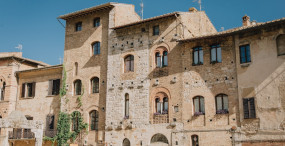
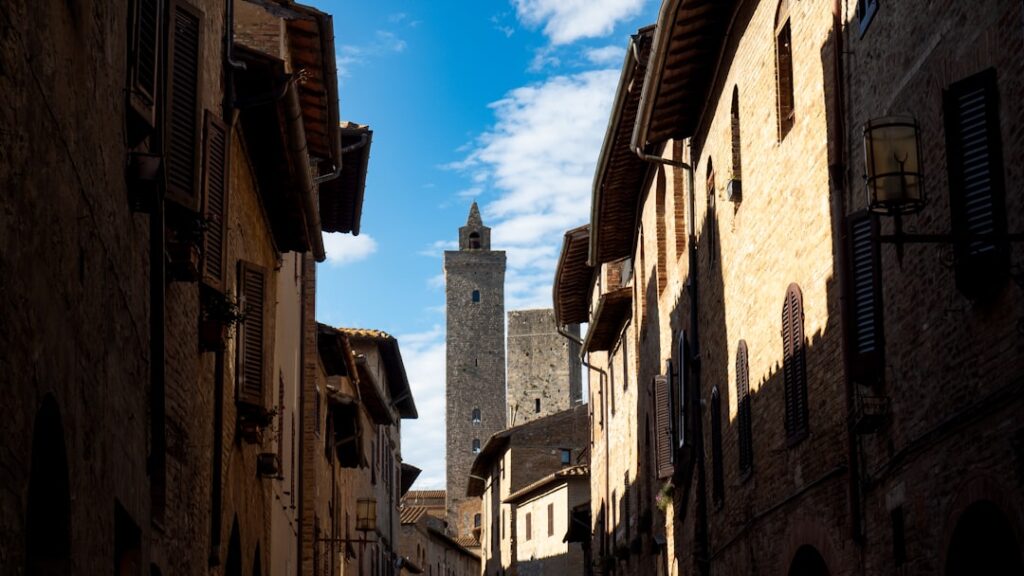
Perched on a Tuscan hill between Siena and Florence, San Gimignano is often nicknamed the « Medieval Manhattan » for its slender towers that puncture the sky. For lovers of medieval architecture, this small UNESCO World Heritage town is a living history lesson: cobbled streets, harmonious squares, ornamented façades, and a concentration of architectural witnesses that make every alleyway a chance to be awed. Here, architecture isn’t just observed — it’s experienced, heard (footsteps echo on stone), touched (walls bear the traces of time), and savored (historic cafés frame medieval vistas).
San Gimignano has preserved an exceptional urban ensemble dating mainly from the 11th to the 14th centuries. Its towers, originally erected by noble families as displays of power and prestige, form a distinctive skyline you can admire from the Piazza della Cisterna and the Piazza del Duomo. Major monuments — the Collegiata di Santa Maria Assunta (the Duomo), the Palazzo Comunale with its Torre Grossa, and the Rocca di Montestaffoli — tell a story of rivalries, religious art, and civic life set in stone.
But San Gimignano is not a frozen museum: it’s a living town where traditions mix with modern visitor expectations. Careful conservation, local museums like the Museo Civico e Pinacoteca, guided tours and local craftsmen make architectural discovery a multisensory experience. For visitors interested in the structure and techniques of medieval construction, details matter: wall thickness, barrel and ribbed vaults, materials (local stone, mortar, wood) and defensive strategies visible from the towers.
In this article we’ll take a detailed look at the must-see sites and monuments, provide exact addresses, opening times, prices in euros, immersive descriptions of the spaces, and practical tips to make the most of your visit — whether you’re an amateur architect, photographer, art history student, or simply passionate about the Middle Ages. Each description aims to help you visualize, understand and plan, with a focus on the architectural elements that make San Gimignano unique.
 Click here to book a day trip to San Gimignano

The Towers and the Urban Silhouette: Torre Grossa, Torre dei Salvucci and the Art of Family Towers
The most characteristic feature of San Gimignano is undoubtedly its cluster of towers. Originally there were as many as 72 private towers; today 14 remain and shape the famous skyline. Among them, the Torre Grossa is the tallest and the most accessible to the public. Located within the Palazzo Comunale on Piazza del Duomo, 1, 53037 San Gimignano SI, Italy, Torre Grossa rises to 54 meters and offers unrivaled panoramic views over the Elsa Valley and the hills of Val d’Elsa.
Address: Torre Grossa, Piazza del Duomo, 1, 53037 San Gimignano SI, Italy.
Opening hours: generally open daily; high season (April–October) roughly 10:00–19:00, low season (November–March) roughly 10:00–17:00 — check current hours on the official website.
Price: combined ticket Museo Civico and Torre Grossa about €9.00 (full price), reduced €6.00, free for children under 6.
The Torre dei Salvucci (near Porta San Giovanni) and the Torre Rognosa are other remarkable examples of families competing in height and elegance. These towers functioned as fortified residences, symbols of power, and vantage points for monitoring the countryside. Architecturally, there are interesting differences: some towers are solid to the top with habitable floors, others have simpler staircases, and the presence of paired windows or round arches reveals their evolution between Romanesque and Gothic styles.
Practical tips: arrive early in the morning or late afternoon to avoid the crowds and enjoy the side light ideal for photographing stone façades. If you want to study construction techniques, inspect the stone joints and window embrasures; also note modern repairs that reflect successive restorations. Finally, combine the climb up Torre Grossa with a visit to the Museo Civico e Pinacoteca to put the panorama into its historical and artistic context.
Click here to discover San Gimignano with a private guide

The Palazzo Comunale and the Museo Civico e Pinacoteca: Art, Frescoes and Civic Memory
The Palazzo Comunale (also called Palazzo del Popolo) is the civic heart of San Gimignano. It is also located at Piazza del Duomo, 1, 53037 San Gimignano SI, Italy and houses the Museo Civico e Pinacoteca. The complex features rooms decorated with medieval and Renaissance frescoes, civic archives and the famous « San Gimignano 1300 » model which reconstructs the historical topography and tower network of the town.
Address: Museo Civico e Pinacoteca, Piazza del Duomo, 1, 53037 San Gimignano SI, Italy.
Opening hours: generally 10:00–19:00 in high season; reduced hours in low season (check online).
Price: combined ticket Museo Civico + Torre Grossa around €9.00 (full), reduced €6.00. Free entry for children under 6.
Inside, the rooms are a manifesto of medieval municipal power: allegorical frescoes, religious scenes and narrative cycles illustrate both piety and civic assertion. The painting collection (pinacoteca) includes works by local and Tuscan painters that help explain the stylistic transition from late Byzantine influences to early Gothic movements. The contrast between the solidity of exterior walls and the delicacy of interior paintings offers immersion into the dual functional and symbolic roles of civic buildings.
Immersive description: imagine entering the Sala di Consiglio where once prominent citizens debated taxes, laws and alliances. Vibrant frescoes depict biblical and civic episodes that legitimated the social order. Modern subdued lighting highlights the pictorial layers; stone floors and benches attest to wear from use and continuity of function.
Practical tips: allow at least 1h30 for a full visit. Bring a loupe or a macro lens if you’re a photographer to capture pigment details and craquelure; also take notes on Latin or dialect inscriptions that annotate some works. If possible, book a guided tour of the museum: local guides often have anecdotes about the fresco patrons and recent restorations.
Click here to book a half-day visit to San Gimignano
The Collegiata di Santa Maria Assunta (Duomo) and the Fresco Cycles: Sacred Architecture and Pictorial Storytelling
The Collegiata di Santa Maria Assunta, commonly known as the Duomo di San Gimignano, stands on Piazza del Duomo, 53037 San Gimignano SI, Italy. It’s a masterpiece of medieval religious art, especially for its fresco cycles that cover the interior walls and narrate the lives of saints, New Testament scenes, and apocalyptic stories, executed mostly in the 14th and 15th centuries by Tuscan painting schools.
Address: Collegiata di Santa Maria Assunta, Piazza del Duomo, 53037 San Gimignano SI, Italy.
Opening hours: usually open from 10:00 to 18:00 (hours may vary with season and services).
Price: paid entry to access the fresco cycles, roughly €4.00–€5.00 per person (indicative), free for very young children; check locally for actual rates and guided visit options.
From an architectural standpoint, the Collegiata is understated on the outside — a simple geometric volume — but the interior is abundant. Vaults, arches and pillars stage the frescoes whose arrangement follows a narrative logic: from the vestibule to side chapels, each space guides the faithful through a visual catechism. Pigments, sometimes mineral-based, have survived thanks to favorable conservation conditions and careful restorations. The overall effect is immersive: light filtered through small side windows creates shadowed areas that intensify the reading of the painted scenes.
Sensory immersion: stand in the middle of the nave and let your eyes follow the cycle: the Crucifixion, the Resurrection, then lives of local saints. Hear visitors’ footsteps and the whisper of audio guides; feel the coolness of stone underfoot. Wooden benches, worn by centuries of prayers, add a human touch to these sacred surfaces.
Practical tips: for architecture buffs, examine the junctions between masonry and frescoes: they often reveal construction phases and rebuildings. Photographers should favor late morning for softer light in the nave. Finally, respect silence zones and closed areas during services — the Collegiata remains an active place of worship.
Click here to buy tickets and visit the Duomo
Rocca di Montestaffoli, Panoramas and Urban Archaeology: A Military and Landscape Perspective
The Rocca di Montestaffoli (sometimes called « Parco della Rocca ») is the fortified promontory that overlooks San Gimignano. Located on the hilltop, the main access is from Via San Giovanni or the trails leading from Piazza della Cisterna. The Rocca is not just a military ruin; it provides a valuable landscape and archaeological setting to understand the town’s defensive strategy.
Address: Rocca di Montestaffoli, access via Via San Giovanni / Piazza della Cisterna, 53037 San Gimignano SI, Italy.
Opening hours: access to the park is mostly free and open daily; however, some areas may be closed for restoration. Check local notices at the park entrance.
Price: generally free.
The Rocca combines remains of curtain walls, trenches and bastions that reflect successive adaptations aimed at protecting the town. The site is ideal for studying defensive topography: its ridge position allowed 360° visibility, making a surprise attack almost impossible. Terraced ground traces also show the local stone being quarried for construction, and rows of beam sockets reveal the use of timber structures now gone.
Immersive experience: climb to the Rocca viewpoint at sunset. The panorama reveals San Gimignano’s silhouette with its towers in stark contrast against the golden valley; low light accentuates stone textures and highlights roof contours. This lookout is also a unique vantage point to understand how the town’s architecture relates to the agricultural landscape — olive groves, vineyards and copses surrounding the settlement.
Practical tips: wear sturdy walking shoes — paths are steep and uneven. Bring water and a hat in summer; the wind can be strong on the ridge and shade is scarce. Architecture students should bring a sketchbook or a drone (if allowed) to document the relationship between relief and fortification — but check local drone regulations first. Finally, pair a Rocca visit with a stroll through Parco Montestaffoli to observe local biodiversity and the interpretive panels along the trail.
Click here to book a half-day discovery of the San Gimignano hills

Practical Itinerary and Local Tips: Hours, Tickets, Dining and Photography
To get the most out of San Gimignano as a medieval architecture enthusiast, good logistical preparation is essential. Here’s a detailed practical guide to organizing your visit.
- Tickets and museums: the combined ticket for the Museo Civico e Pinacoteca and Torre Grossa is often the best option (about €9.00 full price, €6.00 reduced). The Collegiata di Santa Maria Assunta requires a separate fee to access the fresco cycles (about €4.00–€5.00). Minor museums, workshops and small private exhibitions can cost between €3.00 and €7.00. Very young children often get free entry.
- Opening hours: most sites open between 9:30 and 10:00 and close between 17:00 and 19:00 depending on the season. The high tourist season runs from April to October; expect extended hours. To avoid queues, aim for early openings or later hours.
- Getting to San Gimignano: by car, useful GPS reference is Via San Matteo / Porta San Giovanni to enter the historic area. Public parking lots are located at the town’s perimeter (e.g. Parcheggio Fraz. San Giovanni / Parcheggio Valdelsa) and typically cost between €1.50 and €3.00 per hour depending on location. It’s advisable to leave your car outside the ZTL (limited traffic zone) and walk in.
- Dining: after a morning of architectural wandering, try Osteria del Carcere (Via San Matteo, 10) or Trattoria Chiribiri (Via Sant’Agostino, 22) — main courses typically between €10.00 and €18.00. For a coffee break with a view, the Gelateria Dondoli on Piazza della Cisterna is famous (gelato €3.00–€5.00). Also sample the local Vernaccia di San Gimignano at wine bars like Enoteca di Piazza.
- Photography and equipment: bring a wide-angle lens to capture towers and squares, a telephoto for sculpture and fresco details, and a lightweight tripod for low-light shots inside churches. Respect flash bans in museums and religious spaces. Don’t forget spare batteries — climbs up towers and lots of filming sap power quickly.
- Guides and reading: book a specialized guided tour (medieval architecture focus) for technical interpretation: explanations on vaulting techniques, measurements, material use and stylistic evolution. Reference books and local publications are available at the Museo Civico shop and at some specialist bookstores in town.
Click here to book a Chianti and San Gimignano tour

Conservation Etiquette and Respecting Heritage
As an admirer of medieval architecture, your behavior on site matters: do not touch frescoes or painted surfaces, respect barriers and follow site instructions. Small-group visits reduce wear on the sites and make for a better experience. If you plan commercial photography, inquire about permits with local administrations.
Conclusion: San Gimignano, a Living Laboratory for the Study of Medieval Architecture
In many ways, San Gimignano is an open-air laboratory for anyone wanting to understand medieval architecture holistically — technical, symbolic and urban aspects. The concentration of private towers, the civic role of the Palazzo Comunale and the Museo Civico, the pictorial richness of the Collegiata di Santa Maria Assunta and the strategic position of the Rocca di Montestaffoli offer a comprehensive picture of how medieval Tuscan society combined defense, prestige and piety. Every stone tells of a political decision, an aesthetic choice or a technical constraint. For the attentive observer, San Gimignano does more than display monuments: it stages dialogues between domestic architecture and public monuments, between vernacular and monumental, allowing a deeper grasp of medieval urban life in its material and symbolic dimensions.
Practically speaking, the town is well-equipped for specialist visits: museums with explanatory materials, interpretive panels, trained local guides and a hospitality and dining offer that lets you extend the immersion. For an in-depth study, combine monument visits (Torre Grossa, Museo Civico, Collegiata) with observation walks to the Rocca and on-site investigations — examining masonry techniques, photographic surveys of joints and defensive devices, and conversations with restorers or curators. These interactions enrich technical understanding with concrete stories about restoration phases and material provenance.
Beyond technique, San Gimignano delivers an emotional experience: the sight of the towers at sunset, the morning silence on Piazza della Cisterna, the warmth of a coffee shared in front of a medieval façade — all moments that turn intellectual knowledge into sensitive memory. Whether you come for academic, professional or purely personal reasons, prepare your visit by booking necessary tickets, checking official opening hours (practical information can change) and respecting the heritage. You’ll leave not only with photos and notes, but with a deeper, more resonant vision of the built Middle Ages — one that only a town as well-preserved and expressive as San Gimignano can provide.